
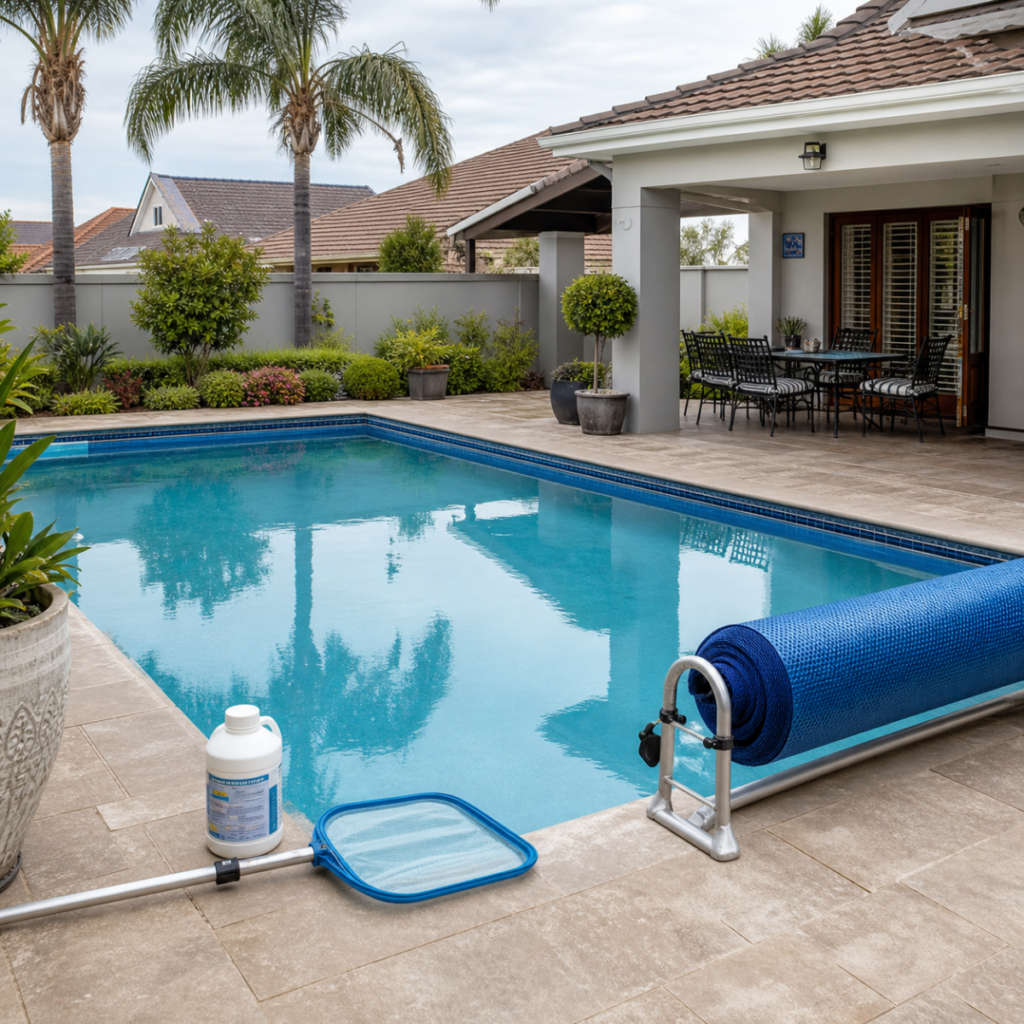
Winter pool care tips are important for South African pool owners because a swimming pool does not stop needing attention when swimming season slows down.
Our winters are often mild, with warm spells, wind, rain and falling leaves that can still affect water balance, pool surfaces, pool equipment and the chemicals working in the water.
The good news is that winter pool maintenance is usually simpler than summer care. With the right cleaning routine, balanced pH levels, a secure winter pool cover and a basic weekly maintenance schedule, you can keep your pool in good shape and make it easier to get pool ready when spring arrives.
This guide explains how to prepare your pool for winter, what to check each week, and when to adjust your routine. If you need professional advice, contact us.
For extra resources, we also have a guide to maintaining a swimming pool when it is not in use.
What to consider before choosing pool heating systems?
Before you choose a pool heating system, start with the basics.
First, look at pool size, pool surface, and total surface area.
A larger swimming pool needs more heat, more time, and a properly sized unit. If the system is too small, it will struggle to heat the pool to your desired pool temperature.
Next, look at the pool area around it. Wind, shade, and cool night air all increase heat loss.
Water evaporation also pulls heat out of pool water faster than many owners expect. A pool that gets strong sun and less wind will usually be easier and cheaper to heat.
Then consider the way you use your swimming pool:
- Do you swim most days?
- Do you want a longer swimming season?
- Or do you only want warm water for occasional weekends and entertaining?
Lastly, look past the purchase price. Running cost, electricity or fuel use, maintenance, and long-run value matter just as much as the upfront cost.
You will need:
- A water test kit or pool shop water test
- Pool brush, leaf net and skimmer basket access
- Chlorine or salt chlorinator output settings
- pH and alkalinity adjusters
- Algaecide or phosphate remover if needed
- A clean winter pool cover
- Access to the pool pump, filter, salt cell and other pool accessories
1. Clean the swimming pool thoroughly
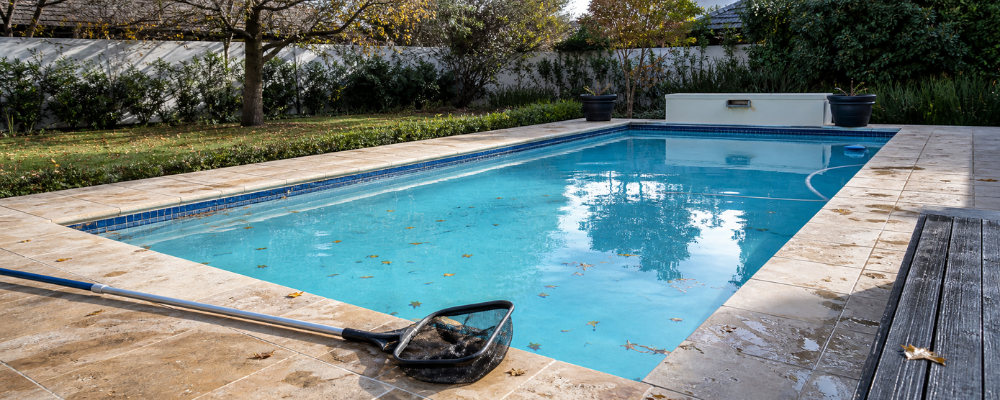
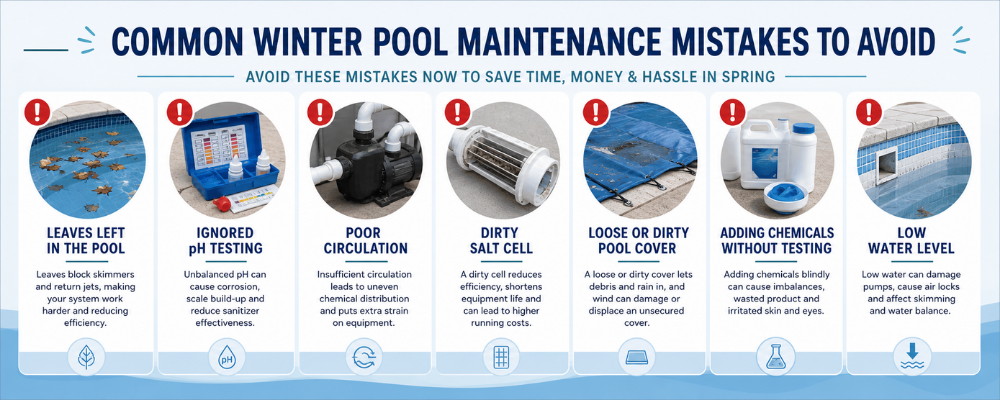
Start by removing debris before it sinks, stains or becomes a food source for algae. Skim the surface, empty the skimmer basket, brush the walls and floor, and vacuum the pool so organic matter is removed before the water cools.
Pay attention to steps, corners, benches and shaded areas where algae and bacteria often build up. If your pool surfaces have visible marks, brush them before you add chemicals so chlorine can work more effectively.
An automatic pool cleaner can help keep your pool cleaner through winter, especially if trees drop leaves into the water after windy South African cold fronts. Explore Baracuda’s automatic pool cleaner range if you want to reduce manual cleaning, or use the complete guide to pool cleaning for a deeper routine.
2. Test and balance the water
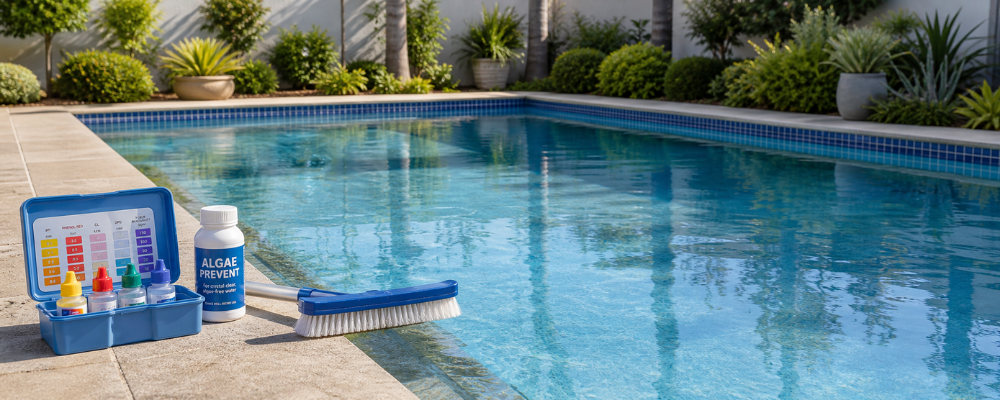
Good water balance is essential before you prepare a pool for winter. Test chlorine levels, pH, alkalinity and stabiliser, then adjust slowly according to product instructions or professional advice.
Aim to keep pH levels in the recommended range for your pool system, usually around 7.2 to 7.6. If the pH drifts too high, chlorine becomes less effective and scaling can develop. If pH drops too low, water may become corrosive and damage pool surfaces or equipment.
Balancing water before winter helps protect the pool, the filter, the salt cell and other equipment. It also reduces the chance of green water, algae growth and bacteria while the pool is being used less often.
3. Shock the pool if needed
Chlorine helps sanitise the water by controlling algae, bacteria and other contaminants. If the water looks dull, has a strong chlorine smell, or has been under heavy swimming use, test first and then shock the pool if needed.
Do not add chemicals blindly. Too much chlorine can be wasteful, while too little chlorine can allow algae to take hold. Follow the instructions for your pool chemicals, keep the pool pump running while the treatment circulates, and retest before adding more.
If your pool uses a salt chlorinator, remember that the salt cell still needs attention even when swimming slows down. Check the cell for scale, clean it according to the manufacturer’s instructions, and adjust output for the lower winter demand.
4. Control algae before it becomes a spring problem
Algae can grow more slowly in cooler water, but it does not disappear. In South Africa, sunny winter days can warm shallow water enough for algae growth, especially when chlorine is low, circulation is poor or pH levels are unbalanced.
If your pool has a history of algae, speak to a pool professional about whether algaecide or phosphate remover is useful before winter. Phosphates can feed algae, so removing the food source may help keep your pool clear.
The aim is not to overload the water with chemicals. The aim is to keep your pool stable enough that you do not open the cover in spring and find a green, cloudy pool waiting for you.
5. Check the pool pump, filter and circulation
Your pool pump and filter still matter in winter. Water needs movement so chlorine can circulate, debris can be captured, and chemicals can spread evenly through the swimming pool.
Clean the pump basket, backwash or clean the filter if required, and check for leaks, unusual noises or low water flow. If the pressure gauge, suction cleaner or return jets suggest poor flow, investigate before it becomes a bigger cost.
Efficient circulation helps protect water quality and equipment, particularly during periods of loadshedding or reduced pump run time. Learn how to improve pool circulation, and compare swimming pool pumps if your current pump is old, noisy or unreliable.
6. Secure the winter pool cover
A winter pool cover is one of the simplest ways to reduce debris, slow evaporation and keep your pool easier to manage. A cover clean of leaves and dirt also protects the water underneath, so do not forget to maintain the cover itself.
Fit the cover securely, remove standing water after rain, and brush or rinse off leaves before they break down. If debris is left to rot on top, it can still find its way into the water and lead to staining, algae and extra cleaning.
A cover can also help save swimming pool water during dry winter periods, which is especially useful in water-conscious areas of South Africa. Use Baracuda’s water-saving tips for swimming pools if you want to reduce top-ups and protect your water level.
Final thoughts on winter pool care tips
Winter pool care is about prevention. Clean the pool, balance the water, protect the surface with a winter pool cover, keep the equipment moving, and check the pool each week so small issues do not lead to bigger problems.
If you need advice on pool equipment, a pool pump, an automatic pool cleaner, a salt cell or general winter pool maintenance, contact the Baracuda team. You can also use the Where To Buy page to find a nearby Baracuda supplier and pool store in South Africa.
Frequently asked questions about pool heating in South Africa
How do you maintain a swimming pool in winter?
Clean the pool, test and adjust water balance, maintain chlorine levels, keep the pump and filter working, secure the pool cover and follow a weekly maintenance schedule. Properly maintaining your pool in winter reduces algae, bacteria, debris and spring cleanup work.
Do I need to add chemicals to my pool in the winter?
Yes, most pools still need chemicals in winter, but often less than in summer. Test before adding chlorine, pH adjusters, algaecide or other pool chemicals so you only add what the water needs.
What are the 3 C's of pool maintenance?
The 3 C’s are often described as circulation, cleaning and chemistry. In winter, all three still matter: circulate the water, remove dirt and debris, and keep chemicals balanced.


