
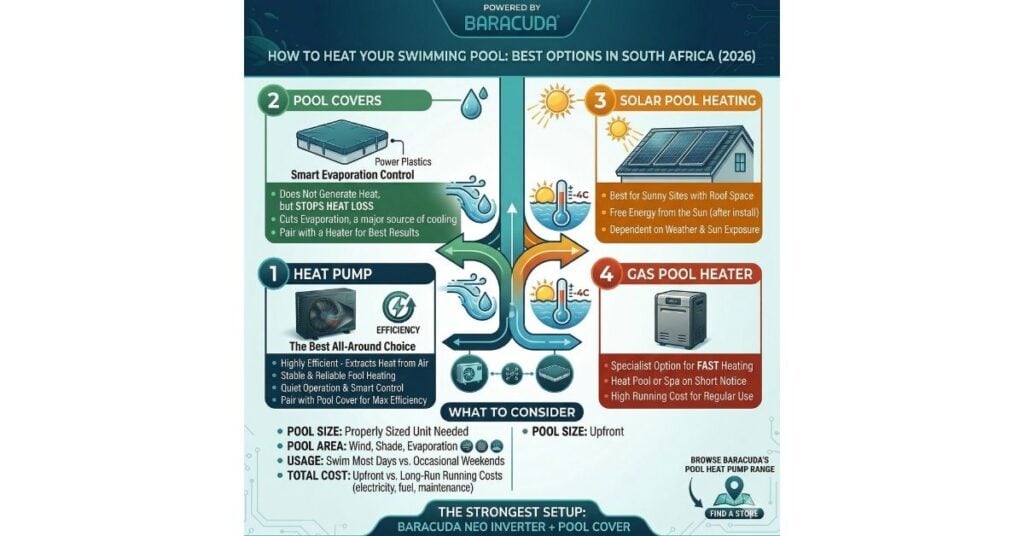
A swimming pool can feel perfect in peak summer, then turn into a freezing cold pool once the weather cools, the wind picks up, or the sun drops earlier in the day.
If you want to heat a pool properly, there is no single answer for every home. The right pool heating setup depends on your pool size, surface area, budget, how often you swim, and the water temperature you want to hold.
In this article, we break down the main pool heating systems used in South Africa, including heat pump pool heating, pool covers, solar pool heating, and other alternatives options.
You’ll see where each system works well, where it may fall short depending on your needs, and which setup is the best fit for day-to-day residential pool use.
If you want a reliable pool heater for regular swimming, browse Baracuda’s Baracuda’s pool heat pump range and find a pool store near you using our interactive map.
Key takeaways
- A pool heat pump is often the best all-around pool heating option for regular home use.
- Pool covers and a pool blanket do not generate heat on their own, yet they reduce heat loss and help keep the pool water warm.
- Solar pool heating can work well in the right pool area, and a gas pool heater is only usually best for fast heating in very specific cases.
What to consider before choosing pool heating systems?
Before you choose a pool heating system, start with the basics.
First, look at pool size, pool surface, and total surface area.
A larger swimming pool needs more heat, more time, and a properly sized unit. If the system is too small, it will struggle to heat the pool to your desired pool temperature.
Next, look at the pool area around it. Wind, shade, and cool night air all increase heat loss.
Water evaporation also pulls heat out of pool water faster than many owners expect. A pool that gets strong sun and less wind will usually be easier and cheaper to heat.
Then consider the way you use your swimming pool:
- Do you swim most days?
- Do you want a longer swimming season?
- Or do you only want warm water for occasional weekends and entertaining?
Lastly, look past the purchase price. Running cost, electricity or fuel use, maintenance, and long-run value matter just as much as the upfront cost.
Option 1. Heat pump pool heating for a swimming pool
For many South African homes, using a pool heat pump is the strongest all-round choice.
A heat pump pool heater does not create heat in the same way a gas heater does. Instead, heat pumps use electricity to extract heat from outside air and transfer it into the pool water.
That makes them a more efficient way to heat a swimming pool for regular use, especially when the goal is to keep the water warm over a longer swimming season rather than heat the pool quickly for a single event.
This is where a heat pump often outperforms other heating systems. It gives you stable pool heating, lower running cost than a gas pool heater in many home setups, and a more cost-effective way to hold a usable pool temperature over time.
Baracuda’s Neo Inverter Heat Pump is a strong fit for homeowners who want an efficient pool heater with quieter operation, smart control features, and models sized for different pool volumes. If you want a more advanced heat pump pool option, this is a natural place to start.
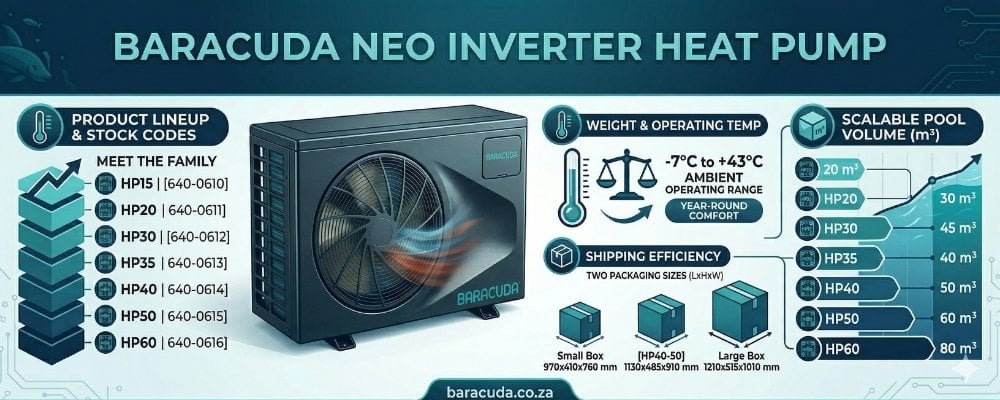
You can also look at pool heat pumps through PoolXpert and find an expert near you.
No heat pump pool system is magic, though.
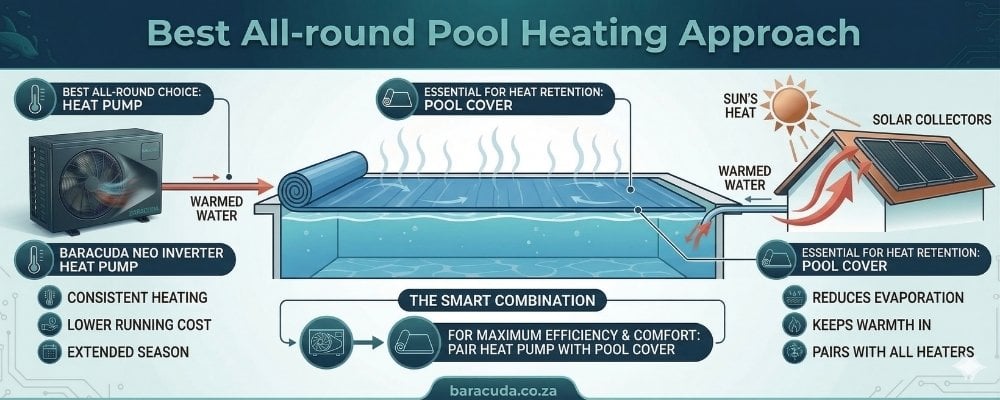
Heat pumps perform best when the unit is correctly sized and when heat loss is kept under control. Pairing a heat pump with pool covers or a pool blanket makes a real difference.
Less evaporation means more heat stays in the water, energy consumption stays lower, and the system does not have to work as hard to hold the desired temperature.
If your goal is steady water heating for regular swimming, a heat pump pool heater is usually the first option worth looking at.
Option 2. Pool covers and pool blanket options to keep a pool warm
Pool covers are often treated like an extra. In reality, they can be one of the smartest pool heating purchases you make.
A pool blanket or thermal cover does not work like a pool heater. It will not heat a pool the way a heat pump, solar pool heating system, or gas pool heater can.
What it does very well is cut heat loss.
It reduces evaporation, shields the pool surface from wind, and helps hold warmth in the water after a sunny day or an active heating cycle.
That matters more than many owners think. Water evaporation is one of the biggest reasons pool water cools down so quickly.
Once that heat escapes, your pool heater needs more energy, more time, and more cost to bring the water warm again.
If you want a thermal cover option, Power Plastics thermal pool covers provides custom pool covers that can help you retain warmth and reduce evaporation.
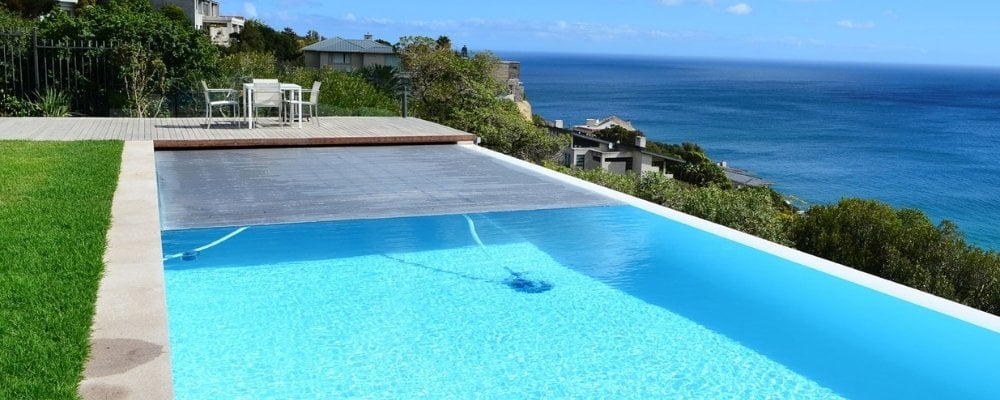
Pool covers are a good fit for owners who want a lower-cost way to keep a pool warm, especially in sunny regions. They are an even better fit when paired with heat pump pool heating. In many homes, that combination gives the best balance of comfort, cost, and day-to-day efficiency.
Option 3. Solar pool heating with solar panels and solar collectors
Solar pool heating can be a very appealing option in South Africa, mainly in homes with strong sun exposure and enough roof space.
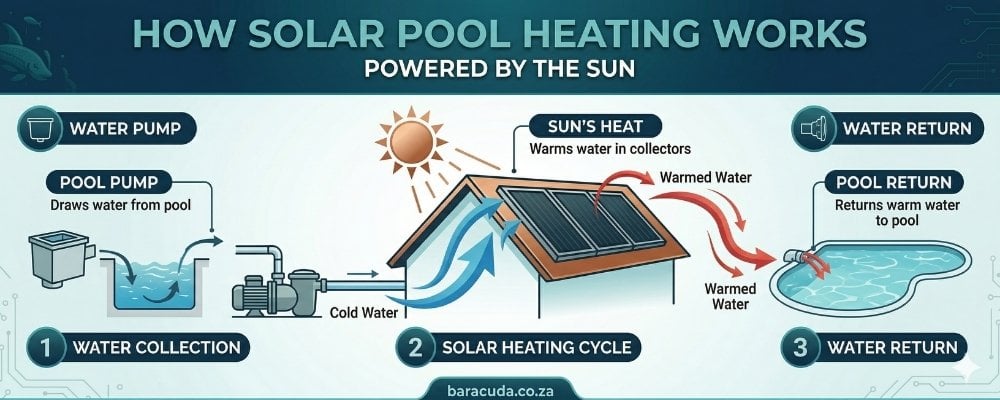
A solar pool heating system usually sends pool water through solar collectors or panels, where the sun adds heat before the water returns to the swimming pool. The big attraction is clear: solar energy can cut running cost and give you a form of free energy once the system is installed.
Still, solar pool heating is not the right fit for every home. The roof layout, plumbing route, local weather, wind exposure, and swimming season all affect performance. If the weather turns cool for long stretches, or the pool sits in shade for much of the day, solar pool heating may not hold your desired pool temperature as well as a heat pump pool heater.
That is why solar often works best in the right setting and with the right expectations. It can be a smart route for owners who want lower operating cost and have a sunny property. It can also work well with pool covers and a properly matched pump.
If your pool gets strong sun for much of the day, solar is worth a place on your shortlist.
Option 4. Gas pool heater options for fast pool heating
A gas pool heater has one clear strength: speed.
If you need to heat the pool faster, push the water to higher temperatures on short notice, or warm a pool or spa for occasional use, a gas heater can make sense. This is why gas pool setups are often chosen for entertainment spaces, holiday homes, or owners who do not want to keep the system running across the full season.
The main drawback is running cost. A gas pool heater can use far more energy than heat pump pool heating when used often. Whether the system runs on natural gas or another gas source, the monthly cost can climb quickly if you are heating pools on a regular basis.
That makes gas a specialist option rather than the best solution for most home pool heating. It suits buyers who value fast heating above long-run efficiency. For regular day-to-day swimming, a heat pump pool heater will usually be the better fit.
What is the best solution to heat a pool in South Africa?
For most residential pool owners, a heat pump pool heater is the best all-round answer.
It gives you reliable pool heating, a more efficient way to keep pool water at a comfortable temperature, and a lower running cost than gas in many cases. It also suits the way many households use a swimming pool: not just once-off heating, yet regular use across a longer season.
The next smartest move is often a pool blanket or thermal cover. If you already have a pool heater, pool covers help hold that heat in the water. If you do not have active heating yet, they can still help keep a pool warm for longer after sunny days.
Solar pool heating is a good fit when the pool area gets strong sun and the roof setup works well for panels or solar collectors.
A gas pool heater is usually best for fast heating, short bursts of pool use, or buyers who want hot water quickly and are less focused on long-run cost.
For many homes, the strongest setup is a Baracuda Neo Inverter Heat Pump paired with pool covers.
Final thoughts on how to heat a pool in South Africa
If you want to heat a swimming pool well, start with how you use the pool, the water temperature you want, and how much heat loss your pool faces.
For most homes, a heat pump pool heater is the strongest all-round choice. Add pool covers, and the system usually works better, costs less to run, and keeps pool water warm for longer.
If you want help finding the right pool heater for your swimming pool, browse Baracuda’s heat pump range or find a pool store near you using our interactive map.
In a related article, you can also explore the best heat pumps in South Africa.
Frequently asked questions about pool heating in South Africa
What is the cheapest way to heat a swimming pool in South Africa?
If you mean the lowest-cost starting point, pool covers or a pool blanket are often the cheapest route. They do not heat a pool in the same way an active pool heater does, yet they reduce heat loss and keep existing warmth in the water for longer.
Are heat pump pool heaters worth it in South Africa?
Yes, in many homes they are. A heat pump is often worth it for owners who swim often, want a longer swimming season, and want a more efficient pool heating system than gas for regular use.
Do pool covers really help heat a pool?
They help mainly by reducing evaporation and heat loss. That means the pool stays warm for longer, and any other pool heating system does not have to work as hard.
Is a heat pump or solar pool heating better for a swimming pool?
That depends on the site and your goals. A heat pump gives you more consistent water heating across different weather conditions. Solar pool heating can be a smart option when the pool gets strong sun and the roof is well suited to panels.
How warm can a pool heater keep pool water in winter?
That depends on the unit size, local weather, wind exposure, and whether you use pool covers. A correctly sized heat pump pool heater with good heat retention will usually hold a more comfortable water temperature than an undersized system working on an exposed pool.


